Living moss wall art vs framed prints for a calm bedroom
Choosing between natural texture and flat art for restful sleep
A bedroom should feel like a retreat. After a long day, the visual atmosphere of the space works on your mind even when you are not paying attention. Hard surfaces, bright patterns and clutter all stimulate the brain, while soft, organic elements encourage it to settle. Many people now consider adding something green to the bedroom, but the choice between a preserved moss wall installation and a framed botanical print is not just about taste. It affects the room's acoustics, its humidity response, the way light moves across the wall, and the long-term maintenance you sign up for. Understanding what each option does best helps you pick the one that actually supports the calm you are after.
What preserved moss wall art brings to a bedroom
Preserved moss is real moss that has been treated with a plant-based glycerin solution so it stays soft, green and maintenance-free for years. It requires no water, no soil and no sunlight. In a bedroom, that matters because you can place it anywhere: above the headboard, on a wall that gets no natural light, or even in a corner that stays dim all day. The texture is what sets it apart. Moss has a three-dimensional surface that catches light from different angles, so it shifts as you move around the room. That visual softness is exactly what the brain reads as safe and restful. Unlike a flat print, which stays static, moss introduces a subtle depth that mimics the irregular surfaces found in nature.
Another practical benefit is sound absorption. Moss panels, especially when mounted on a backing board, dampen echo and soften the overall acoustic of a room. In a bedroom with hard floors and bare walls, that can make a noticeable difference. The feeling of quiet is not just about noise levels; a space that sounds muffled feels more private and cocooning. For someone who works from home and also sleeps in the same room, that acoustic effect can help separate the day's activity from the night's rest.
When you look at options like those from mosswallart.design, the moss comes preserved in its natural green tones or sometimes in subtle dyed shades like soft grey-green or muted olive. The color stays consistent because there is no fading from sunlight. That stability is useful in a bedroom where you might have blackout curtains drawn during the day and only soft evening light. The moss does not wilt, drop bits, or attract insects, so once it is installed, it simply stays as it is. That low-intervention quality aligns with the idea of a calm space: nothing to water, nothing to prune, nothing to worry about.

Framed prints and their place in a restful room
Framed prints, especially those with botanical motifs, have their own strengths. They are lighter, easier to swap out, and far less expensive per square foot. If you like to refresh your bedroom decor every few years, a print gives you that freedom without committing to a large installation. The flat surface of a print also allows for crisp line art, which some people find more tranquil than the organic randomness of moss. A simple ink drawing of a fern frond or a watercolor wash of a forest path can create a focal point without competing with the rest of the room.
Prints also let you control the color palette precisely. You can match the paper tone to your wall color or choose a frame that echoes your bed frame. That level of coordination is harder with moss, which has its own natural variation. For a minimalist bedroom where every object is carefully chosen, a print can feel more deliberate. The downside is that a print is flat. It does not change with the light in the same way, and it does not absorb sound. If you have a small bedroom with hard surfaces, the print will not help with the echo. It also requires a glass or acrylic front, which can reflect glare from a bedside lamp or window, creating a distracting shine that works against the calm atmosphere you are trying to build.
How each option affects the feeling of the room
The psychology of color and texture plays a large role in how a bedroom feels. Moss, in its natural green tones, sits in the middle of the visible spectrum. Green is associated with balance and restoration. It is not as stimulating as blue or as warm as yellow; it simply holds a steady, neutral presence. The texture of moss adds what designers call visual weight without visual noise. Because the surface is irregular but not chaotic, the eye can rest on it without being drawn into a pattern that demands interpretation. That is the opposite of a busy geometric print or a photograph with many details. Moss gives the brain permission to stop scanning and relax.
A framed print, by contrast, is a single image with defined edges. The frame creates a boundary that tells the eye this is an object to look at, not a background. That can be fine if you want a deliberate focal point. But in a bedroom, too many focal points compete for attention. A print over the bed, a lamp on the nightstand, a patterned rug, each one asks the eye to look. Moss, spread across a larger area without obvious borders, acts more like a wall finish than an artwork. It recedes when you want it to and only becomes prominent when you look directly at it. That quality makes it especially suited for a reading nook or a corner where you want the wall to feel alive without demanding engagement.
Maintenance and longevity in a bedroom environment
A bedroom's environment changes throughout the day. Humidity rises during sleep as you breathe and perspire. Air conditioning or heating cycles dry the room out. Moss, being preserved, does not react to these shifts. It does not grow mold or shrink, because the preservation process replaces the natural moisture inside the cells with a glycerin solution that stays stable across normal indoor humidity ranges. That is a real advantage over live plants, which can suffer in a bedroom that gets little direct light. A framed print, on the other hand, is entirely inert. It will not change at all, but it also cannot contribute to the room's atmosphere beyond its visual appearance.
Cleaning is another point to consider. Moss panels gather dust very slowly because the surface is not sticky, but after a year or two a gentle puff of compressed air or a soft brush can clean them. Prints need the glass or acrylic front wiped occasionally, and the frame may need dusting. Neither is difficult, but the moss option is less fussy over time. If you have allergies, both options are fine, but moss does not shed pollen or mold spores the way live plants can. That makes it a safe choice for a bedroom where you spend eight hours breathing the air.

When each choice makes sense
Consider a preserved moss wall if you have a larger wall that feels bare and you want to introduce a natural element without the commitment of live plants. It works especially well in a room with neutral tones, soft lighting, and an overall minimalist or organic modern aesthetic. The moss fills the space visually without adding color contrast that might disturb sleep. It is also a good fit for a home office that doubles as a guest bedroom, because the acoustic softening helps reduce distraction during the day and promotes rest at night.
Choose a framed print if you rent and cannot make permanent changes to the wall, or if you enjoy swapping decor seasonally. Prints are also ideal for small walls where a full moss panel would feel overwhelming. A single framed piece above a bedside table can anchor that corner without dominating the room. For someone who travels frequently or moves often, a print is portable and easy to pack. The trade-off is that it will never change the room's atmosphere the way a textured, sound-dampening surface can.
You can also combine both approaches. A large moss panel on one wall and a small framed print on an adjacent wall can create a layered look that feels curated rather than cluttered. The moss provides the background calm, and the print adds a personal note. The key is to keep the print simple, with plenty of negative space around it, so the two elements do not compete. A black-and-white botanical sketch or a single line drawing works better than a busy photograph. Let the moss be the main event and the print a quiet accent.
Practical details before you decide
Moss panels come in various sizes and shapes. Some are rectangular, others are round or custom-cut. Because they are lightweight, they can be mounted with simple adhesive strips on smooth walls, though larger panels may need a screw or nail. The installation is straightforward and reversible if you use wall-safe adhesives. Framed prints typically need a nail or picture hook, which leaves a small hole. Neither option requires drilling into concrete or complex hardware.
Lighting matters. A moss panel looks best under diffused, indirect light. A picture light aimed at a print can create a warm glow, but the same light on moss can flatten its texture. If you have a dimmable overhead light or a floor lamp with a soft shade, the moss will come alive in the shifting shadows. Prints, especially those behind glass, may reflect light in ways that are hard to control. In a bedroom where you want dim, warm lighting before sleep, a print's reflection can be a nuisance. Moss solves that problem by being non-reflective.
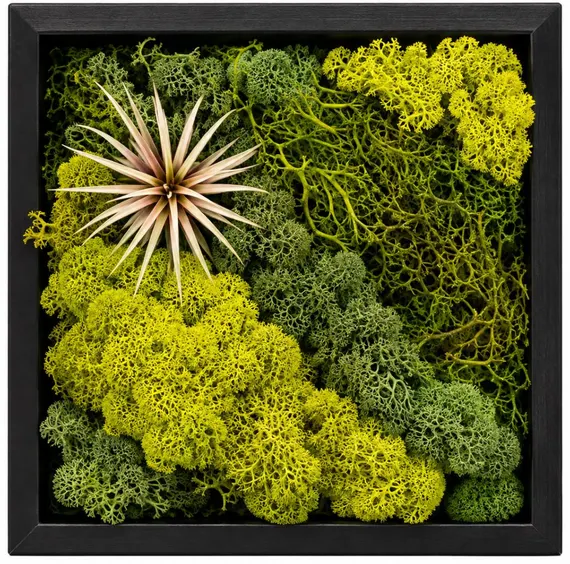
If you are still unsure, think about what kind of calm you want. Do you want the room to feel like a quiet hollow in a forest, where the wall itself breathes? That points to moss. Or do you want a clean, ordered space where a single image focuses your mind before sleep? That points to a print. Both can be calming, but they achieve it through different mechanisms. One works by enveloping you in texture, the other by offering a clear visual anchor. There is no wrong choice, just the one that matches your personal sense of peace.
For those leaning toward the natural texture route, a site like mosswallart.design offers a clear look at what preserved moss can do in an indoor setting. The panels are designed to integrate into a home without feeling like a museum piece. They sit quietly on the wall, adding depth and softness without demanding attention. That is exactly what a bedroom needs: a background that soothes rather than stimulates, so your mind can let go of the day and settle into rest.